How to Check Your Florida Voter Registration Before Nov. 3, and What to Fix if Something Is Wrong
The registration deadline has passed, but there is still time to confirm your status, fix your address or signature, and request a mail ballot. Here is how, step by step.
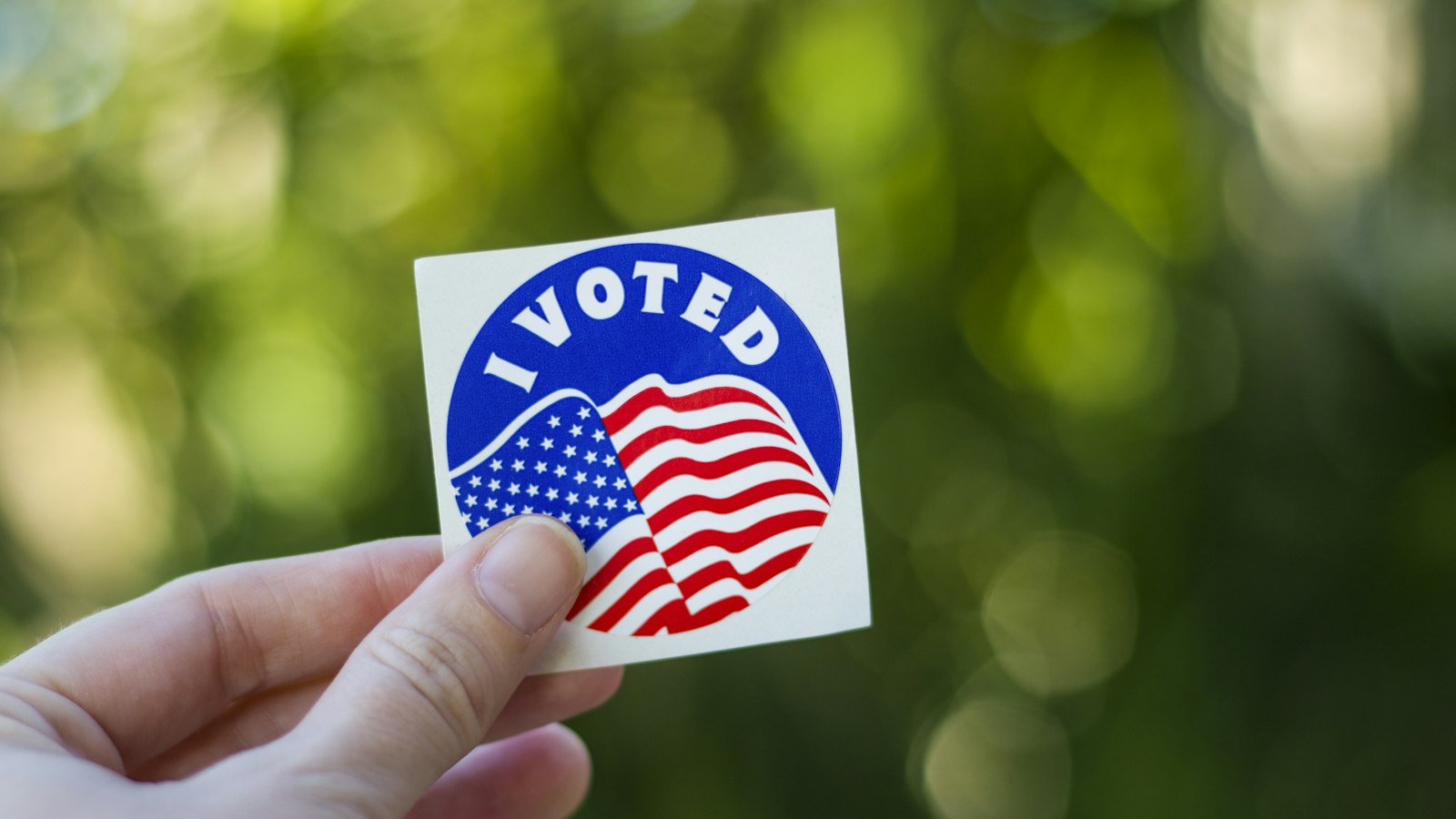
Florida’s general election is Tuesday, Nov. 3, and registration closed on Oct. 5. That does not mean the work is done. Voters can still find the wrong address on file, an inactive status, or a mail-ballot request that quietly expired. Each of those problems can still be fixed, but some get harder to fix the closer it gets to Election Day.
Checking takes a few minutes. Here is how to do it, what to look for, and what to do if something is wrong. All the dates are on our Florida election calendar.
Step 1: Look yourself up
Start with the Florida Division of Elections’ voter lookup. Enter your first name, last name and date of birth exactly as they appear on your registration. It shows whether you are registered, your status and your party.
Then go to your county Supervisor of Elections website. The state directs voters there for their polling place, sample ballot and vote-by-mail ballot status. The state keeps a directory of all 67 supervisors.
If you registered or made a change recently, give it time. Supervisors have up to 13 days to process an application, and it can take another one to two business days to appear online.
Step 2: Check each detail
Status. “Active” is what you want. A voter becomes “inactive” after being sent an address-confirmation final notice and not returning it within 30 days, or if the notice comes back undeliverable. Inactive voters can still vote. Voting, requesting a mail ballot or updating your registration, while confirming your address, makes you active again. If you do none of those by the second general election after becoming inactive, the law requires your name to be removed, and you would have to register again.
Address. Your address decides your precinct, and your precinct decides which ballot you get. If you moved, update your address before you vote.
Name. If you changed your name through marriage, divorce or a court order, update it.
Party. Florida has closed primaries, so party affiliation decides which party primary you can vote in. It does not limit how you vote in the general election.
Signature. This one matters most for mail voters. Your Supervisor of Elections compares the signature on your mail-ballot envelope with the one on file. Signatures change with age, illness and injury. If yours has changed, submit a new one on a Florida voter registration application. By law, the update has to reach your supervisor before your mail ballot does. The signature on file when the ballot arrives is the one it is checked against.
Step 3: Fix what is wrong
If you are not found at all, try variations first: a maiden name, a middle name, a hyphen. Then call your county Supervisor of Elections or the state Voter Assistance Hotline at 1-866-308-6739. If you mailed an application, its registration date is the date of a clear postmark. An application postmarked by Oct. 5 counts for this election.
If you are registered but something is wrong, state law still allows three kinds of updates after the deadline: name, address and signature. Make them online at RegisterToVoteFlorida.gov, by mail, or in person at your Supervisor of Elections office. What you cannot do now is register for the first time or change parties for this election.
If you moved and run out of time, you can still update your address when you vote. Sign an affirmation of your new address at the polling place for your new home, and vote there. That works if you moved within the same county, or if your new county uses electronic poll books. Otherwise you will cast a provisional ballot. Call your new county’s Supervisor of Elections before you go.
Step 4: Check your mail ballot
This is where many voters get caught. Under state law, a vote-by-mail request covers elections only through the end of the calendar year of the next general election. Requests made in 2023 or 2024 expired on Dec. 31, 2024. If you voted by mail in 2024 and have not asked again, no ballot is coming.
- Request deadline: 5 p.m. local time on Thursday, Oct. 22, for a ballot to be mailed to you. You will need your Florida driver’s license number, Florida ID card number, or the last four digits of your Social Security number.
- Return deadline: Your ballot must be received by your Supervisor of Elections by 7 p.m. on Nov. 3. A postmark does not count.
- Track it: Your county Supervisor of Elections website shows when your ballot was mailed and when it was received.
- Fix a problem: If your signature is missing or does not match, your supervisor must notify you. You can submit a cure affidavit until 5 p.m. Thursday, Nov. 5.
Step 5: Make your plan
Early voting: Florida law requires early voting from the 10th day through the 3rd day before the election, which is Oct. 24 through Oct. 31 this year. Supervisors may add days, as early as Oct. 19 and as late as Nov. 1. Check your county for sites and hours.
Election Day: Polls are open 7 a.m. to 7 p.m. local time, and you must vote at your assigned precinct.
Bring a current photo ID with your signature. The state accepts 12 types this year:
- Florida driver’s license
- Florida ID card
- U.S. passport
- debit or credit card
- military ID
- student ID
- retirement center ID
- neighborhood association ID
- public assistance ID
- veteran health ID card
- concealed weapons license
- government employee ID
If your photo ID has no signature, bring a second ID that does. If you forget ID entirely, you can still cast a provisional ballot. It must be counted if you are registered and eligible, have not already voted, and voted in your proper precinct.
What changes in 2027
The Florida Legislature passed CS/CS/HB 991 this spring. The House vote was 77–28, and Gov. Ron DeSantis signed it April 1 as Chapter 2026-26, Laws of Florida. Most of it takes effect Jan. 1, 2027. According to the House’s nonpartisan final bill analysis, the law:
Requires proof of citizenship for registration applications. That includes applications that change a voter’s name, address or party, when the state can’t confirm citizenship through motor vehicle records. In those cases, the county supervisor must verify citizenship using state and federal records. An applicant who can’t be verified must show proof before voting, or will get a provisional ballot.
Defines what counts as proof:
- a U.S. birth certificate (original or certified copy)
- a valid, unexpired U.S. passport
- a naturalization certificate
- a consular Report of Birth Abroad
- a Florida driver’s license or ID that shows citizenship
- another government photo ID that shows citizenship
- a federal court order granting citizenship
If your legal name differs from the name on the document, you must also show proof of the name change.
Directs the Department of State to look for registered voters who may not be citizens, using records from state and federal agencies. Those include motor vehicle records and federal jury-service disqualifications. The department must refer credible matches to county supervisors for the existing removal process.
Puts citizenship status on Florida driver’s licenses and ID cards issued or renewed starting July 1, 2027.
Narrows the IDs accepted at the polls. It drops debit and credit cards, student IDs, retirement center IDs, neighborhood association IDs and public assistance IDs. It adds U.S. passport cards and any other government-issued ID, except IDs from schools and universities.
None of that applies to the Nov. 3 election. But keeping your registration current now can save trouble later. Make sure your name and address match your driver’s license record, and know where your birth certificate or passport is. Anyone whose name has changed should also know where the marriage certificate, divorce decree or court order is.
The law is being challenged in federal court. Three lawsuits are now consolidated in the U.S. District Court for the Southern District of Florida under UnidosUS v. Byrd, before U.S. District Judge Jacqueline Becerra. The plaintiffs are:
- UnidosUS, the League of Women Voters of Florida, Florida Rising, Hispanic Federation, the Florida Immigrant Coalition and Common Cause
- the NAACP’s Florida State Conference and the Florida Alliance for Retired Americans
- Black Voters Matter Fund and the League of United Latin American Citizens, whose case was consolidated in September
In their amended complaint, the NAACP plaintiffs argue that many eligible voters lack the required documents. They point to older Black Americans who were born at home, often because of segregation and poverty, and were never issued birth certificates. They also point to married women whose legal names no longer match their birth certificates.
The state has moved to dismiss. As of Oct. 8, the docket showed no ruling on those motions. The Republican National Committee and the Republican Party of Florida have asked to join the case on the state’s side. Trial is set for Nov. 8, 2027, more than 10 months after most of the law takes effect.
We will keep following the case and how the state carries out the law. Follow our voting and elections coverage.
Key dates: 2026 Florida General Election
Registration deadline
- 5 p.m. local time
Vote-by-mail request deadline
Early voting (required statewide)
- 7 a.m.–7 p.m. local time
General Election Day
- 5 p.m. local time
Ballot cure and provisional-ballot deadline
Frequently asked questions
- How do I check if I am registered to vote in Florida?
- Use the Florida Division of Elections' voter lookup at registration.elections.myflorida.com/CheckVoterStatus. Enter your first name, last name and date of birth as they appear on your registration. For your polling place, sample ballot and mail-ballot status, use your county Supervisor of Elections website. You can also call the state Voter Assistance Hotline at 1-866-308-6739.
- Is it too late to register to vote for the November 2026 election in Florida?
- Yes. Registration closed Oct. 5, the 29th day before the Nov. 3 election. A mailed application with a clear postmark on or before that date still counts. If you are already registered, you can still update your name, address or signature.
- What does it mean if my Florida voter status is inactive?
- You were sent an address-confirmation final notice and did not return it within 30 days, or it came back undeliverable. Inactive voters can still vote. Voting, requesting a mail ballot or updating your registration while confirming your address makes you active again. If you do none of those by the second general election after becoming inactive, you are removed and must register again.
- Can I change my address on Election Day in Florida?
- Yes, if you moved within the same county, or if your new county uses electronic poll books. You sign an affirmation of your new address at your new polling place and vote there. Otherwise you will cast a provisional ballot. Call your new county's Supervisor of Elections to find out which applies to you.
- Do I need to request a new vote-by-mail ballot in Florida for 2026?
- If your last request was made before 2025, yes. Under Florida law, a request covers elections only through the end of the calendar year of the next general election, so 2024 requests expired Dec. 31, 2024. The deadline to have a ballot mailed for Nov. 3 is 5 p.m. local time on Oct. 22.
- Does Florida's new proof-of-citizenship law affect the 2026 election?
- No. Most of HB 991, signed April 1, 2026, takes effect Jan. 1, 2027, including the proof-of-citizenship and voter ID changes. Three consolidated federal lawsuits challenging it are pending in Miami, with trial set for November 2027.
Sources
- Florida Division of Elections: Voter Information Lookup
- Florida Division of Elections: 2026 Election Dates
- Florida Division of Elections: Check Your Voter Status and Polling Place
- Florida Division of Elections: Voter ID at the Polls, reference guide (updated June 2026)
- Fla. Stat. § 97.053: Acceptance of voter registration applications
- Fla. Stat. § 97.055: Registration books; when closed
- Fla. Stat. § 98.065: Registration list maintenance (inactive voters)
- Fla. Stat. § 98.077: Update of voter signature
- Fla. Stat. § 101.045: Change of residence or name at the polls
- Fla. Stat. § 101.048: Provisional ballots
- Fla. Stat. § 101.62: Vote-by-mail requests
- Fla. Stat. § 101.657: Early voting
- Fla. Stat. § 101.67: Vote-by-mail receipt deadline
- Fla. Stat. § 101.68: Canvassing and curing vote-by-mail ballots
- CS/CS/HB 991 (2026), Elections: bill history and enrolled text (ch. 2026-26, Laws of Florida)
- Florida House of Representatives: Final Bill Analysis, CS/CS/HB 991
- UnidosUS v. Byrd, No. 1:26-cv-22257 (S.D. Fla.), docket